

Silent Kōrero: ancestral stories woven through Peata Larkin’s exhibition at The Arts House Trust
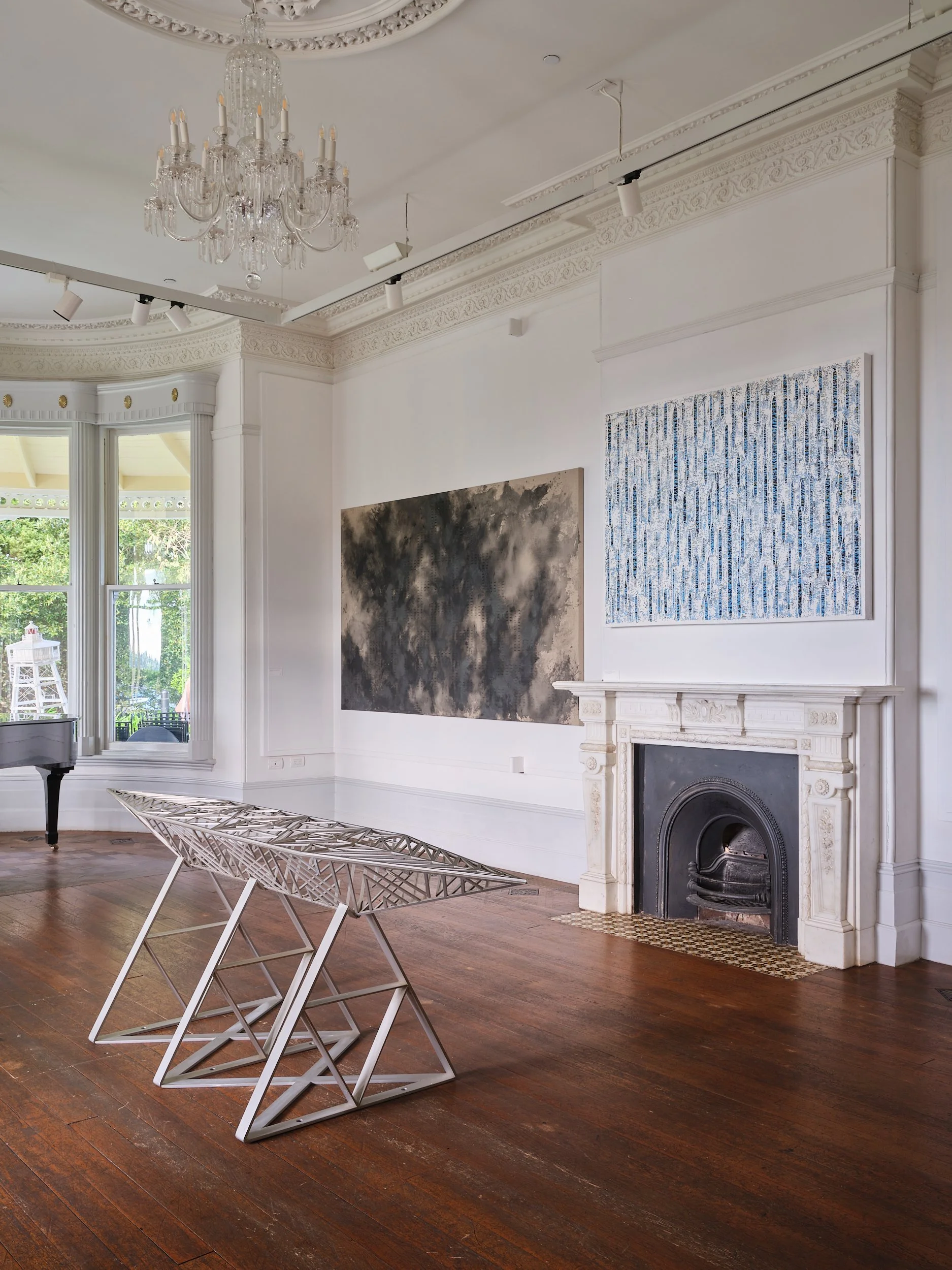
Image 1. Centre: Peata Larkin, He Waka Raranga, 2024, laser cut 6mm stainless steel. Courtesy the Artist and Two Rooms. | Right: Peata Larkin, Hekenga (migration), 2003, acrylic on mesh on canvas. Collection of the Artist. Photo by Sam Hartnett.
On 10 June 1886, the landscape of Rotorua and the lives of its inhabitants changed forever. The eruption of Mount Tarawera blanketed Te Ika a Māui in darkness and destroyed the famed Pink and White Terraces. It also buried the village of Te Wairoa, home to Tūhourangi and the many travellers they hosted. The eruption left a scar on the landscape and on local iwi. This is a scar borne by Peata Larkin (Te Arawa, Tūhourangi, Ngāti Whakaue, Ngāti Tūwharetoa), who whakapapas to Tūhourangi. It is one of the many ancestral stories woven through Larkin’s art practice.
Silent Kōrero traces Larkin’s whakapapa and surveys her two-decade-long career. It threads personal histories into larger stories of creation, migration, loss and endurance. In drawing on ancient and modern forms – from Māori whatu weaving and raranga plaiting to DNA and binary code – Larkin has developed her own visual and material language. Her artworks become acts of reclamation. They transmit stories of her tīpuna and of her place in the world. They capture multiple temporalities, cycling between past and present, between individual moments and longer processes. They tell stories of migration, connection, rupture and self-discovery as Larkin traces her tīpuna to Lake Rotomahana, to the Kaituna River (in a location now known as Maketū) where Te Arawa first landed, across the Pacific from Hawaiki.
Assembled in the Pah Homestead’s drawing room are works spanning over twenty years that illustrate the artist’s whakapapa and her connection to the whenua. He Waka Raranga (2024) stands in the centre, anchoring the surrounding works [Img. 1]. This great steel waka recalls Te Arawa, the waka Larkin’s ancestors used to navigate the Pacific. Such epic voyages are also suggested in Hekenga (migration) displayed above the fireplace just opposite He Waka Raranga [Img. 1]. Painted in 2003, this work reads like a vast blue ocean. The grid-like surface also recalls digital pixels or genetic code wound into waka-shaped chromosomes that cut through the frothy seas. It captures the ways information is preserved and passed down through origin stories, through our bodies and, increasingly in today’s world, through digital media.
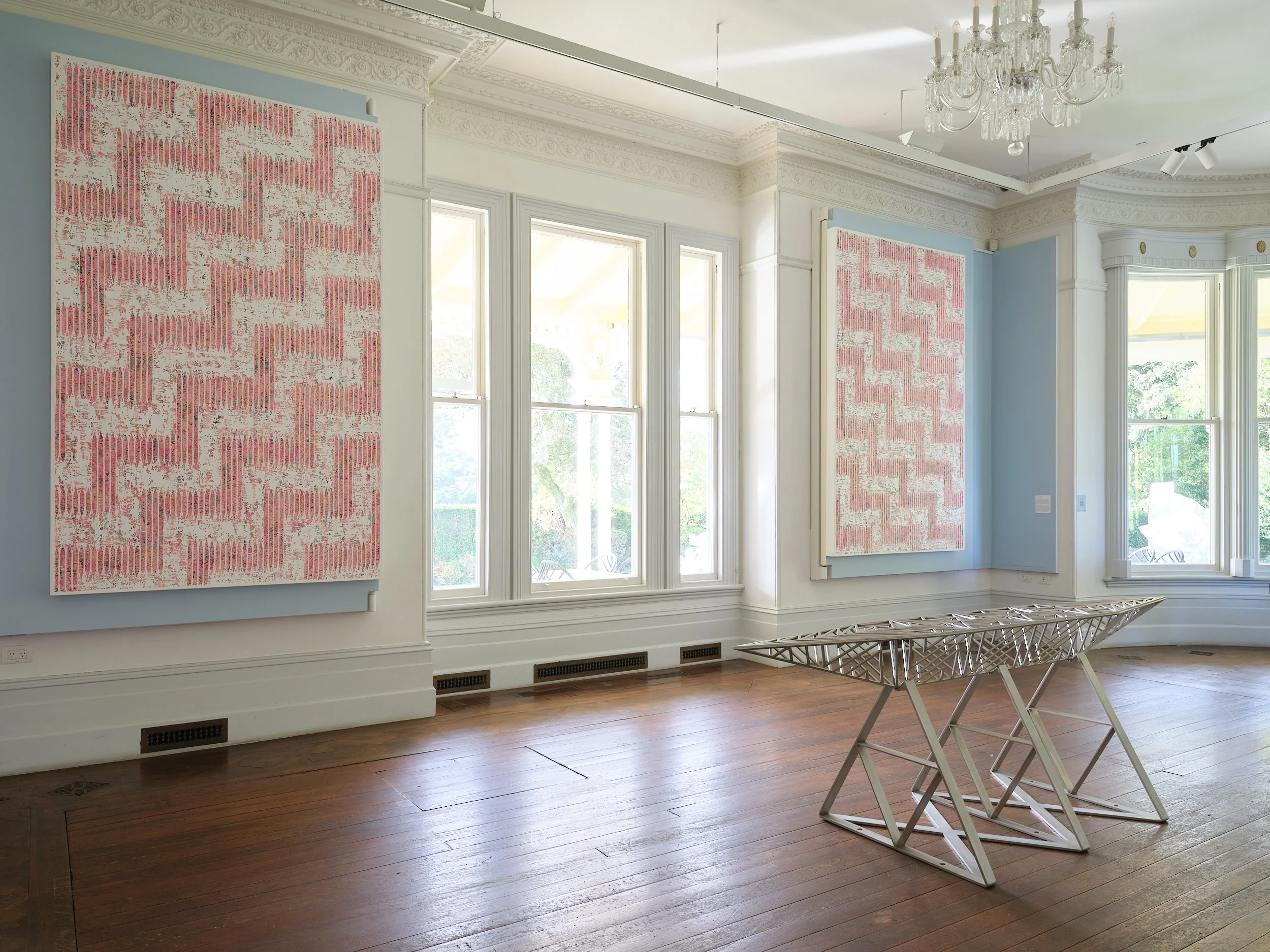
Image 2. Peata Larkin, I am Tūhourangi, 2005, diptych, acrylic on mesh on canvas. Courtesy the Artist and Two Rooms. Photo by Sam Hartnett.
Larkin then transports us from the vast Pacific to the shores of Lake Rotomahana and the famed Pink and White Terraces with her diptych I am Tūhourangi (2005) [Img. 2]. Before being lost in the eruption, the pink and white terraces were cared for by Tūhourangi. They attracted tourists from around the world and were a key source of income for iwi. Tūhourangi guides rowed tourists across Lake Rotomahana to reach the eighth wonder of the natural world. Commonly known as the pink and white terraces, to Tūhourangi they are Te Otukapuarangi (the Fountain of the Clouded Sky) and Te Tarata (the Tattooed Rock). Larkin captures these terraces in a glittering poutama design. In tukutuku, the poutama pattern represents the stairway to heaven and symbolises whakapapa, the continuous journey of learning, personal growth and the pursuit of knowledge. Here, the stepped pattern also mimics the natural form of these geothermal springs, while glossy varnish makes them glow as they do in Charles Blomfield’s nineteenth-century paintings [Img. 3].
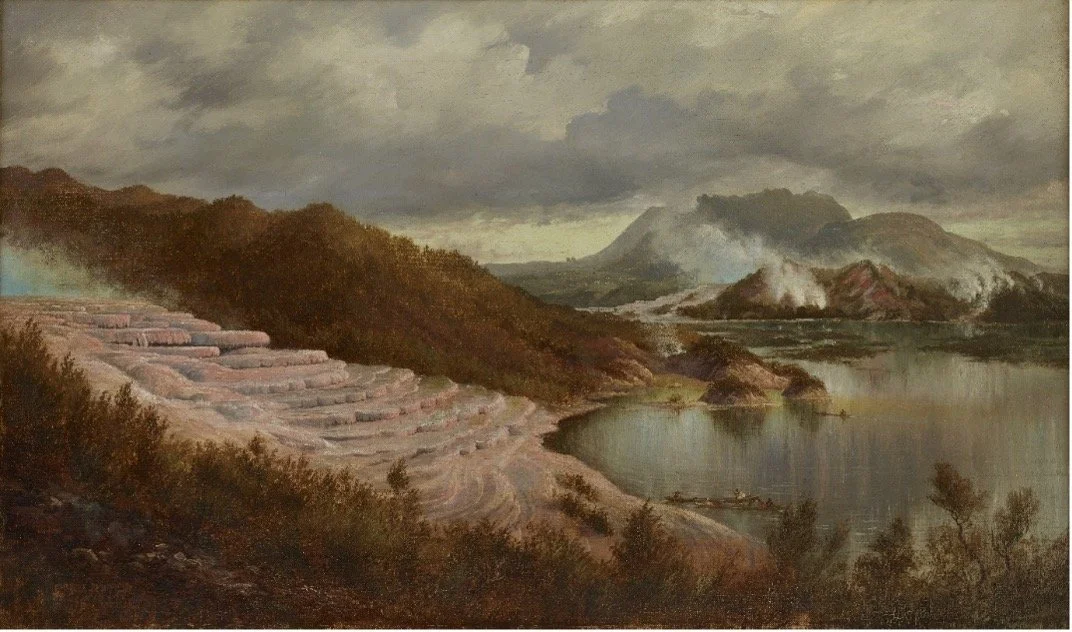
Image 3. Charles Blomfield, The Terraces, 1885, oil on canvas, 753 x 444mm. Te Papa 1992-0035-1647.
In creating woven paintings like I am Tūhourangi, Larkin starts with a coarse mesh which remains visible beneath the paint layer. We see where the warp is stretched tight while the weft has been manoeuvred to create the poutama pattern [1]. Larkin applies colour along the lines of this woven grid, creating something in between painting and weaving. While largely composed of pink and white, upon closer inspection, a whole spectrum of earth tones emerges. The deep blue and bright turquoise of the lakes and the sulphuric ochres of Rotorua’s geothermal fields are woven throughout, firmly grounding Larkin’s work in her iwi’s rohe. The poutama pattern is pulled directly from tukutuku panels where it symbolises whakapapa. Here it tells the story of Larkin’s Tūhourangi ancestors, kaitiaki of Otukapuarangi, Te Tarata and the surrounding whenua, stretching across Mount Tarawera, Whakarewarewa and Lakes Rotomahana, Rotokakahi, Tikitapu, Okareka, Okaro and Tarawera.
The eruption of Mount Tarawera marks a point of rupture. This was a violent eruption heard as far as Christchurch [2]. Ash showered down in distant Tauranga and coated the central North Island in darkness [3]. An estimated 120 people lost their lives. Tarawera (the eruption) captures this ash cloud engulfing the canvas, creating a sense of doom [Img. 4]. However, within the inky black we can just make out a series of small, precise incisions. Together, these slits create another poutama pattern. It becomes the dark negative to the shimmering pink and white terraces on the opposite wall. Here, the poutama symbolises the survival of her whakapapa, but also ascension through learning. Larkin literally cuts through the black of mourning, her process becoming an act of endurance and revival. The work records Larkin’s journey as she reconnects with her whakapapa and her whenua.
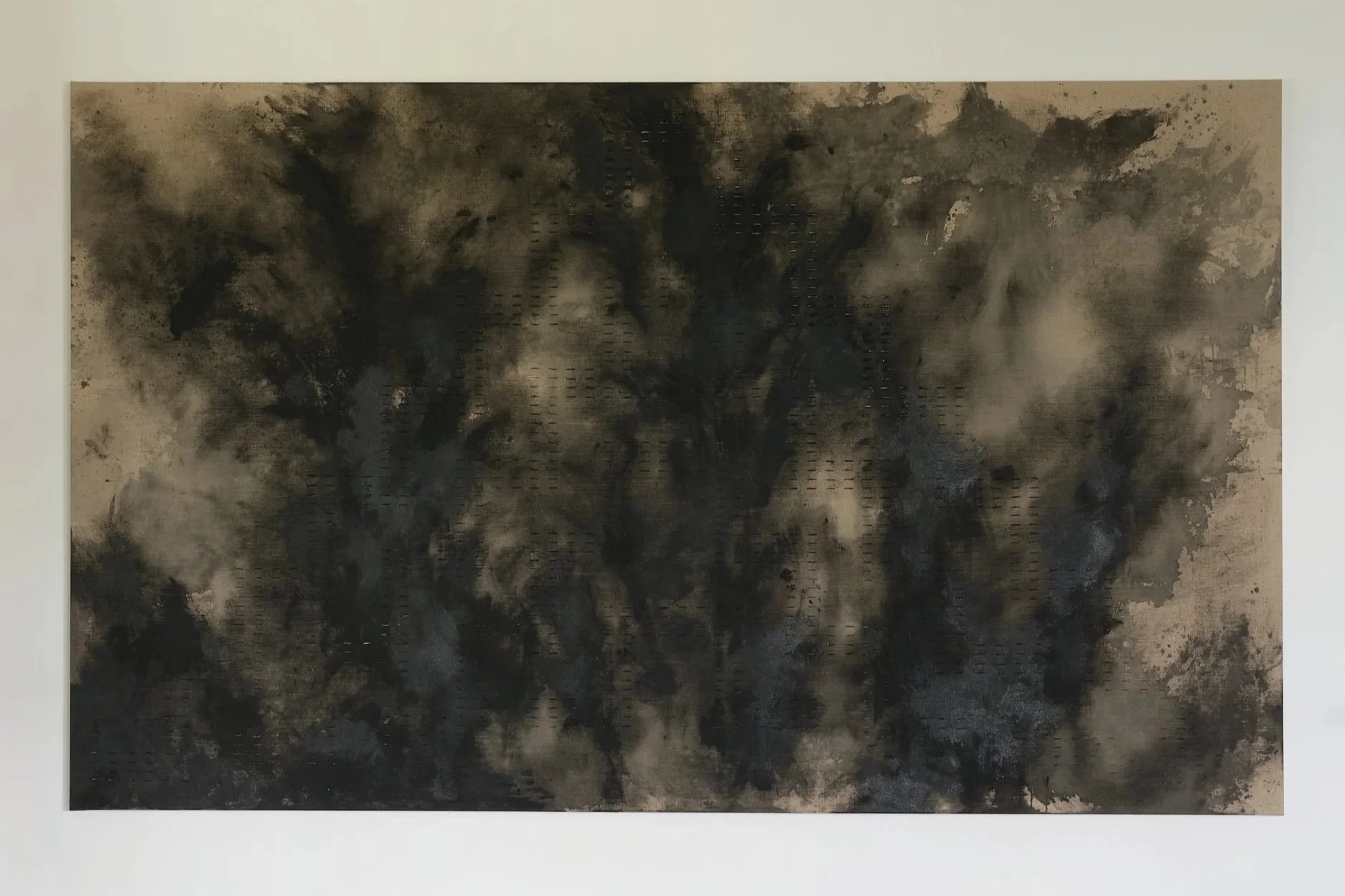
Image 4. Peata Larkin, Tarawera (the eruption), 2022, acrylic on linen. Courtesy the Artist and Two Rooms. Photo by Sam Hartnett
Returning to He Waka Raranga, it similarly embodies Larkin’s journey of self-discovery. Like her ancestors who sailed across the Pacific and who wove pūrākau into tukutuku panels, Larkin’s work breathes connection. Her works sit on a continuum of Māori art history, connecting the ancestral and contemporary worlds by combining ancient forms with new media [4]. She threads stories throughout her practice, embedding herself, her whānau and her iwi within broader narratives of creation and migration.
Written by Megan Bennett.
[1] Two Rooms, “Peata Larkin – Fourth State of Matter,” Two Rooms, 2016.
[2 - 3] Vaughan Yarwood, “The Night Tarawera Awoke,” New Zealand Geographic 65 (2003). https://www.nzgeo.com/stories/the-night-tarawera-awoke/.
[4] Deidre Brown and Ngarino Ellis, with Jonathan Mane-Wheoki, Toi Te Mana: An Indigenous History of Māori Art, Auckland University Press, 2024, 5.
Peata Larkin: Silent Kōrero
The exhibition is on view at The Arts House Trust from 28 May – 16 August 2026.