

Saturday 22 August • 3 - 4PM • Free Event
In Conversation
Sefton Rani & Dina Jezdić
Join us for a conversation between artist Sefton Rani and Dr Dina Jezdić, exploring the ideas, processes, and inspirations behind Rani’s exhibition at The Arts House Trust, Clear My Throat, curated by Jezdić as part of our annual Guest Curator programme.
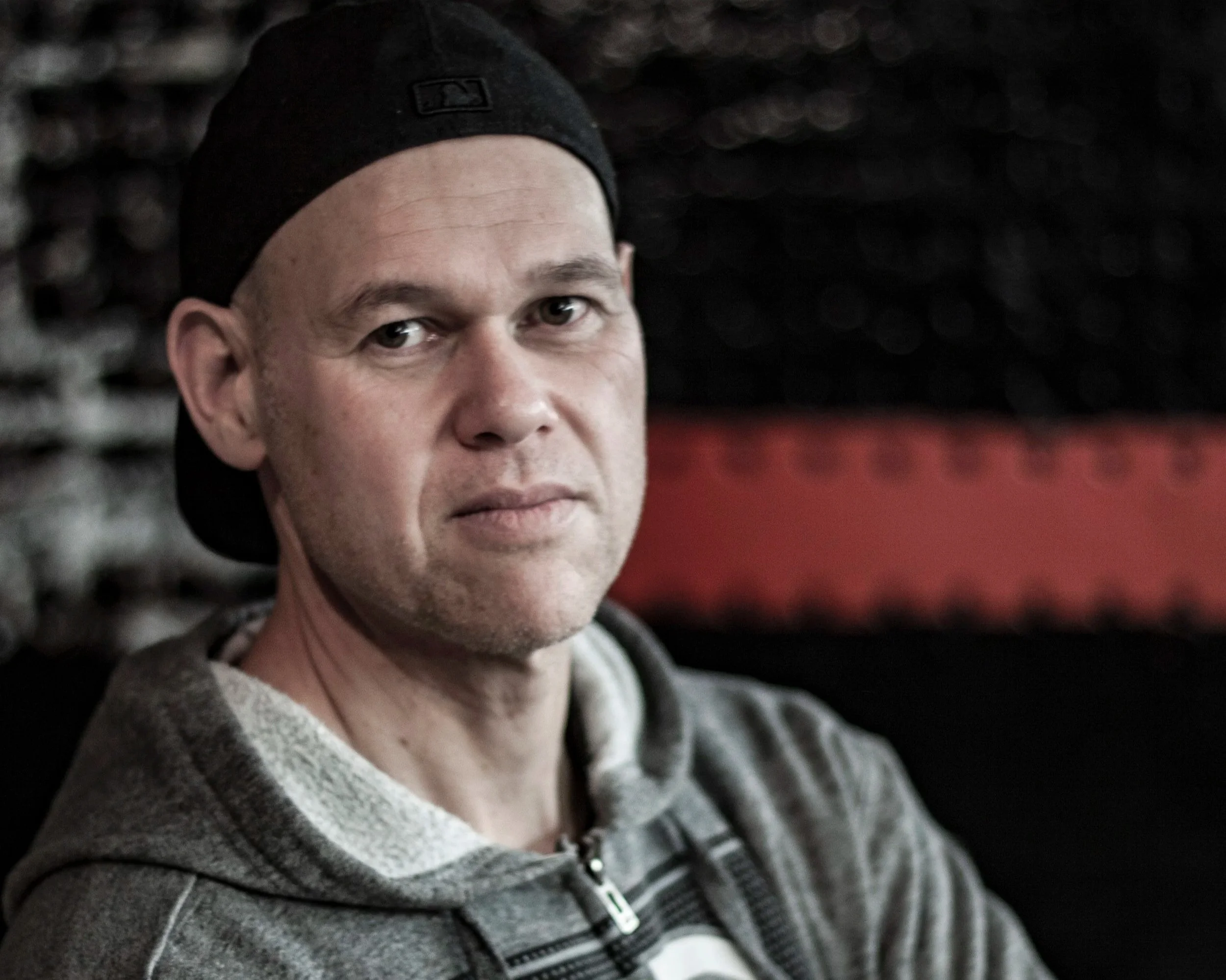
Sefton Rani
Awarded the McCahon House Parehuia artist residency in 2025, Sefton Rani is of Cook Island heritage through his father and his work is an ongoing exploration of his Pasifika identity in the context of working class and industrial Auckland.
Referring to his works as ‘industrial tapa’ Rani sees his work as sculpting in paint to create a contemporary Pacific art that reflects the, in large part, industrial working-class reality of Auckland’s Pasifika community, and eschewing the overtly ‘Pasifika’ motifs and imagery more commonly employed. While continuing to be informed by traditional tapa, carving, tattoo, weaving and tivaevae, his work fits within, or grows out of, the experience of the Pasifika diaspora, adapting to a new and very different urban context in New Zealand. It is an art that strikes a precarious balance between “where you are” and “where you’re from” and speaks across racial and geographical divisions.

Dina Jezdić
Dina Jezdić is an art critic, curator, and tauiwi decolonial scholar based in Aotearoa New Zealand. She is a Postdoctoral Fellow at the University of Auckland, where her research explores contemporary art and its capacity to produce knowledge, challenge power, and connect to lived experience. An Obama Foundation Leader (Asia-Pacific) and former Tate Intensive Fellow, she writes widely on contemporary art, with publications across Aotearoa, Australia, and the United States.