

A Moment to Hold with Hannah Ireland
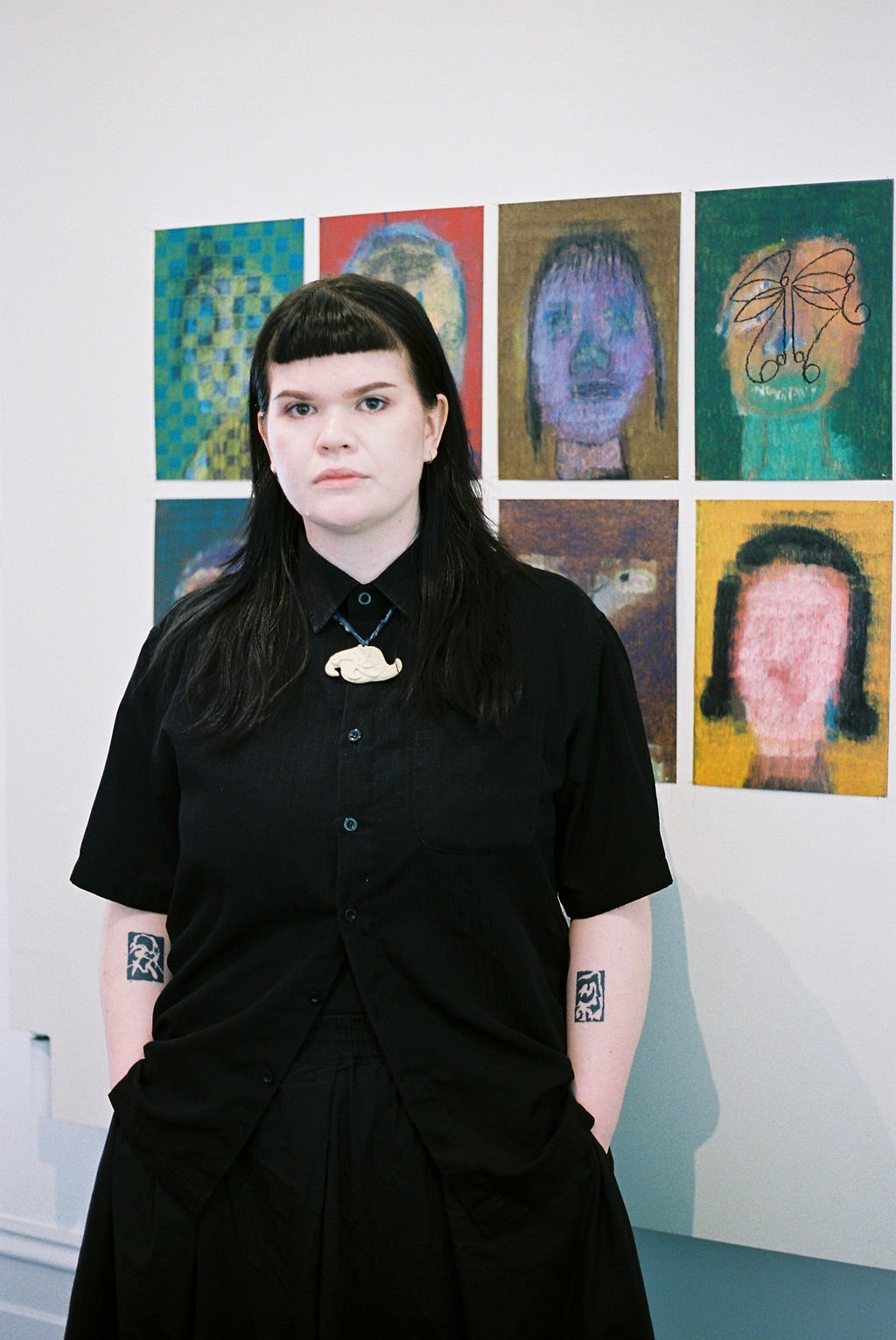
Photographed by Ophelia Jones with support from The Black & White Box.
In the spirit of A Moment to Hold, this series of pauses to capture a point in the lives and careers of three artists whose works feature in the exhibition—Ruby Wilkinson, Hannah Ireland & brunelle dias. Photographed by Ophelia Jones and paired with reflections on their practice, the series gently spotlights the artists as they are now, while preserving this moment as part of the exhibition’s archive.
Film processing for this series was kindly sponsored by The Black & White Box.
February 7 2026Hannah Ireland
“Right now, the ‘me’ of this moment — as an artist and as a person — feels attentive, patient, and open. I’m less focused on arriving at conclusions and more invested in staying with what’s unfolding. The work feels slower and more deliberate, shaped by repetition, return, and a growing trust in intuition rather than resolution. There’s a stronger comfort with uncertainty — an acceptance that not everything needs to be clarified or resolved.”
Tell us a little about your background as an artist. How has your practice evolved to where it is now?
I am a contemporary artist based in Tāmaki Makaurau, Auckland. I graduated with a Bachelor of Arts in Psychology and a Bachelor of Fine Arts (First Class Honours) from the University of Auckland. My background in psychology continues to inform my practice, grounding it in psychological observation, relational experience, and the subtleties of everyday life.
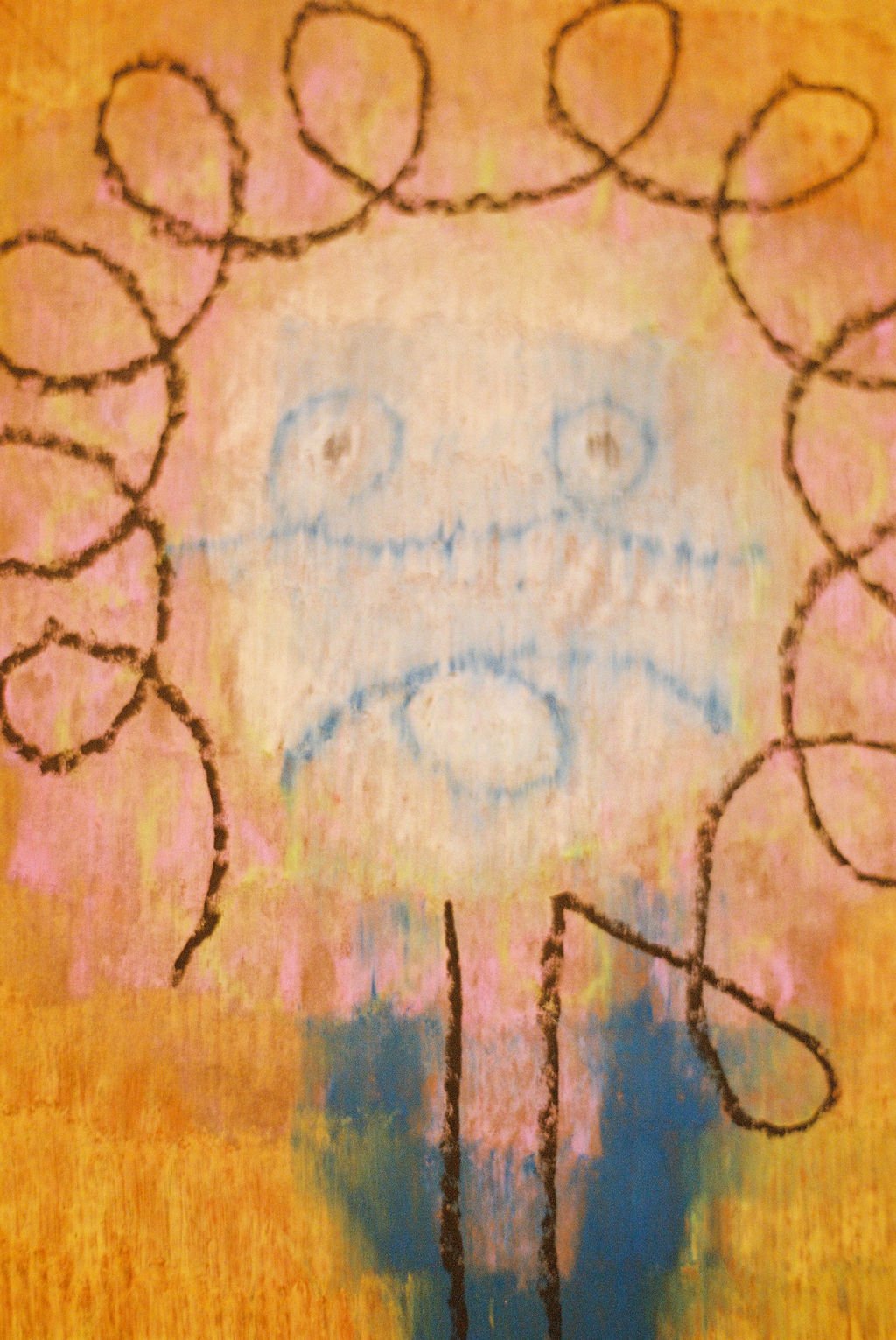
Working primarily through painting and drawing, I create expressionistic portraits and abstracted forms that engage with whakapapa, cultural memory, and the emotional terrain of lived experience. These concerns emerge as intuitive impressions—gestures, loops, tensions, and hums—that speak to the harmonies and frictions of being in relation to people, place, time, and history.
My practice has evolved through an increasing openness to material responsiveness. Where earlier work was more introspective, reflecting my own identity and connection to place, I have since found a quiet confidence in broadening this lens to engage more expansively with shared and relational experience. Physical materials have become a way of teasing out intangible concerns such as emotion, memory, and embodied experience.
At the heart of my work is a negotiation between visibility and concealment, control and instinct. Figures develop through layering, reworking, and disruption, resulting in works that feel both intentional and provisional. Some are boldly reductive, others barely there; some solitary, others leaning toward or embracing one another in quiet, tender ways.
I now approach materials less as something to disrupt or control and more as a partnership—an active relationship in which materials leave marks, traces, and conversations within the work. This approach embraces improvisation, distortion, and uncertainty, producing figures that hover between clarity and ambiguity and inviting viewers to interpret and reassemble meaning within the layered, tactile space of the work.
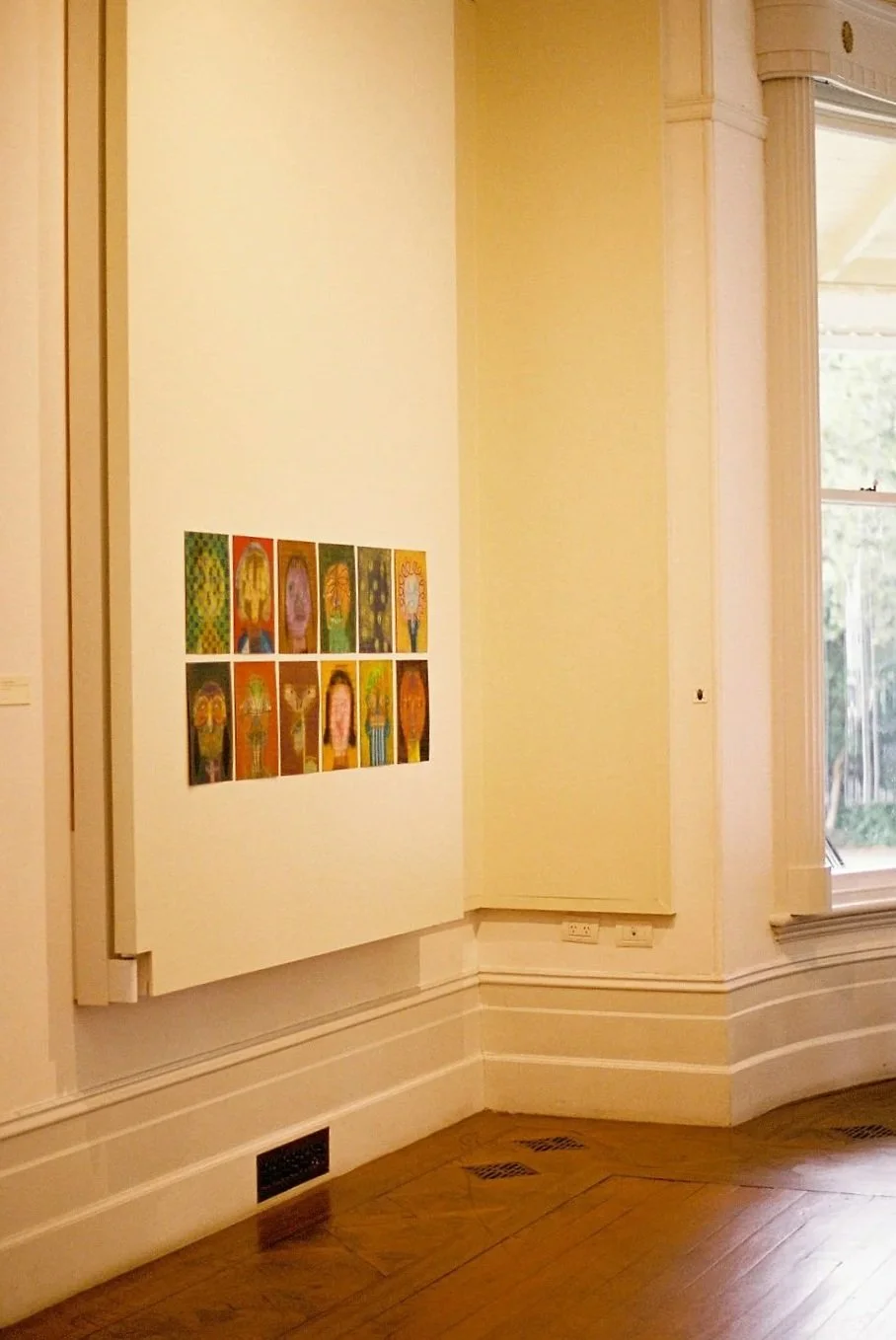
A Moment to Hold is shaped by memory and lived experience. How does painting influence the way you remember or understand moments from your life?
Painting offers me a space to meditate. Moments don’t tend to arrive as complete stories, but as small, lingering fragments — a colour, a feeling, a sense of closeness that’s hard to pin down. Working through paint gives those fragments a place to sit, without needing to tidy them up too quickly.
I often think of painting as a kind of excavation. It allows me to dig into things that are held but not yet fully understood, and to spend time in the muddiness of memory rather than trying to organise it. As I work, memories shift. What once felt clear can soften or unravel, while other details quietly surface. Marks are layered, wiped back, or left unfinished, echoing the way memory edits itself over time.
Painting also creates a pause. Translating experience into material introduces a small distance, making room to look again without needing to explain or resolve what’s there. I’m less interested in preserving what happened than in staying with how it felt, even when those feelings are partial or contradictory.
In A Moment to Hold, memory becomes physical — something that can be handled, rearranged, and carried forward. The works sit between remembering and letting go, holding impressions rather than fixed narratives, and allowing meaning to continue forming over time.
Tell us about your works featured in A Moment to Hold. How do they relate to ideas of memory, are they born from specific memories?
The works in A Moment to Hold are shaped by lived experience, but they aren’t drawn from single, fixed memories. They emerge from moments that linger — feelings, atmospheres, and relationships that repeat or resurface over time, rather than belonging to one clear event.
Memory enters the work as something fluid. Forms are revisited, interrupted, or allowed to remain unresolved, reflecting the uneven way experiences are remembered. Some details stay close, others soften or fall away. What matters isn’t accuracy, but what remains present — the emotional residue that continues to move beneath the surface.
Rather than illustrating the past, the works hold memory as something ongoing. They occupy a space between remembering and letting go, allowing experience to be felt without being pinned down. In this way, the works aren’t about recalling what happened, but about staying with what lingers.
Together, the works in A Moment to Hold offer memory as a shared, open space. They invite viewers to encounter the work through feeling rather than narrative, bringing their own associations and interpretations, and allowing meaning to remain active and unfinished.
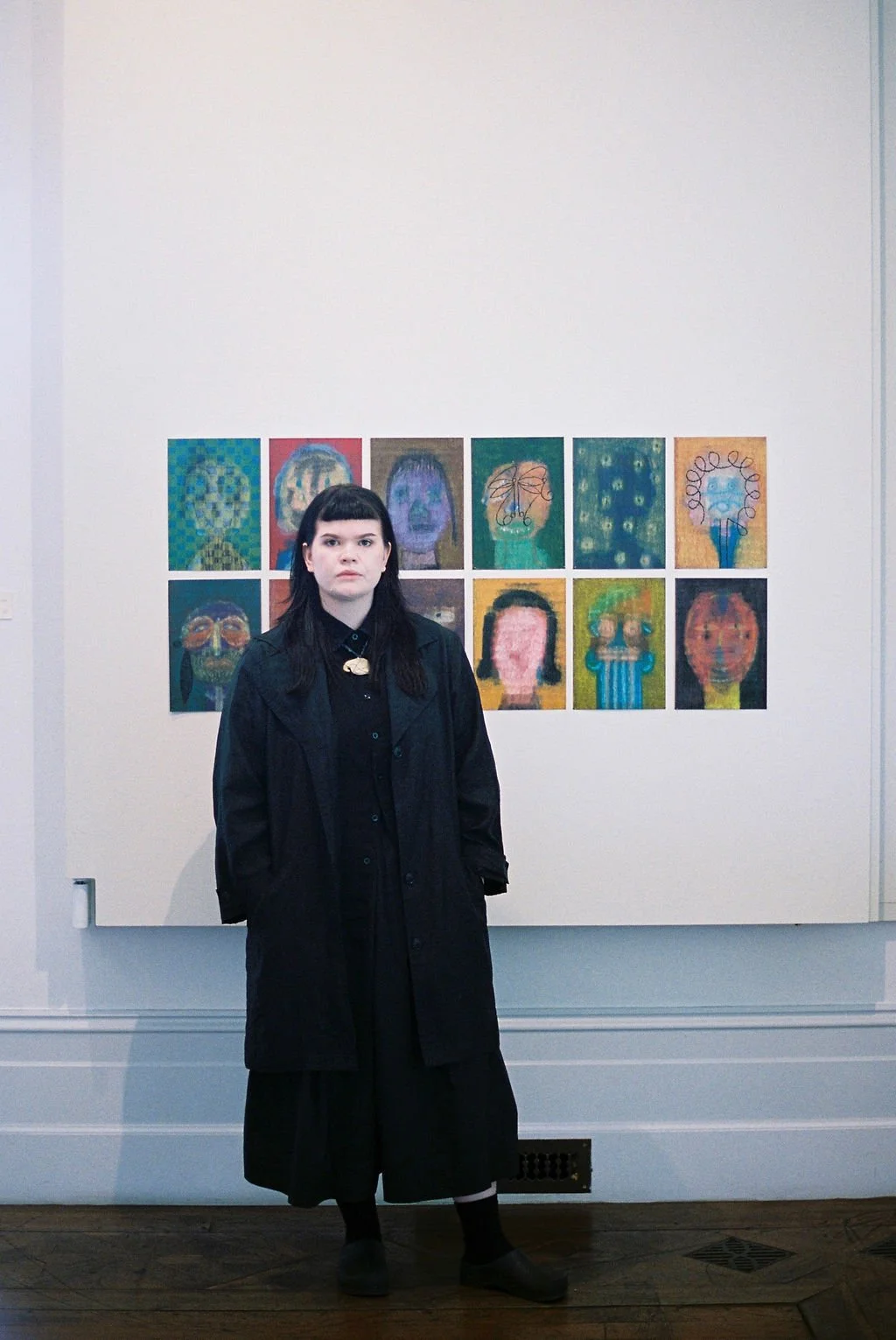
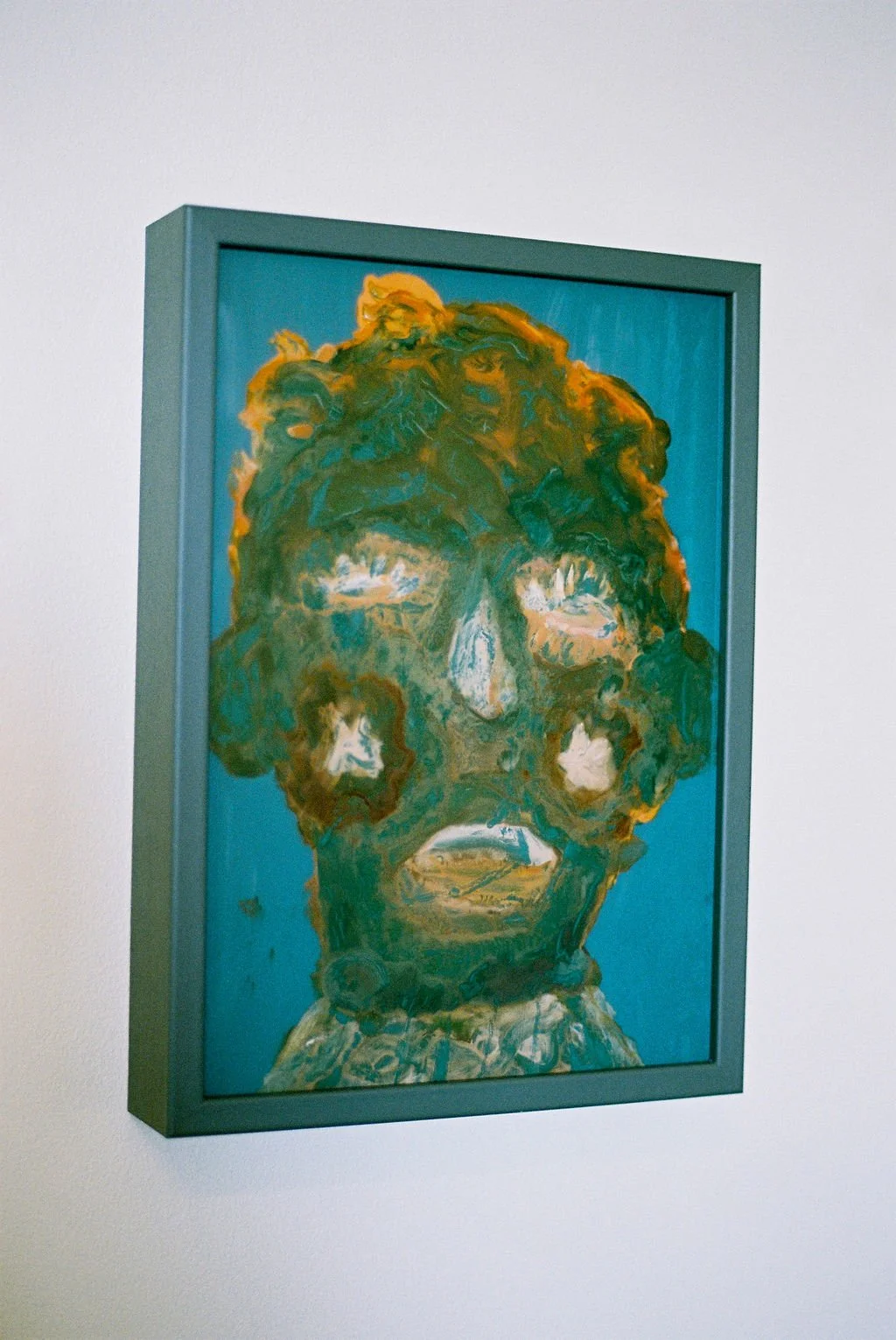
Who is the you of now, both as an artist and a person? What would you like to remember about this moment in time?
Right now, the “me” of this moment — as an artist and as a person — feels attentive, patient, and open. I’m less focused on arriving at conclusions and more invested in staying with what’s unfolding. The work feels slower and more deliberate, shaped by repetition, return, and a growing trust in intuition rather than resolution. There’s a stronger comfort with uncertainty — an acceptance that not everything needs to be clarified or resolved. I’m learning to let images remain open, to resist overworking or explaining, and to listen closely to materials, to memory, and to what continues to resurface.
What I’d like to remember about this moment is the sense of closeness — to people, to place, and to my own way of working. There's a clearer understanding of what needs care and what can happily dance on the outskirts.
If something is emerging, it’s a quieter confidence in allowing the work to hold its own ambiguity. What feels like its ending is the urge to seek immediate clarity. What’s very much in the thick of it is listening, staying present, and holding space for the work, for attention, and for the time it takes for things to come into focus.
Hannah Ireland is represented by Jhana Millers Gallery • Instagram
•
A Moment to Hold is on view at The Arts House Trust 20 November 2025 – 1 March 2026.
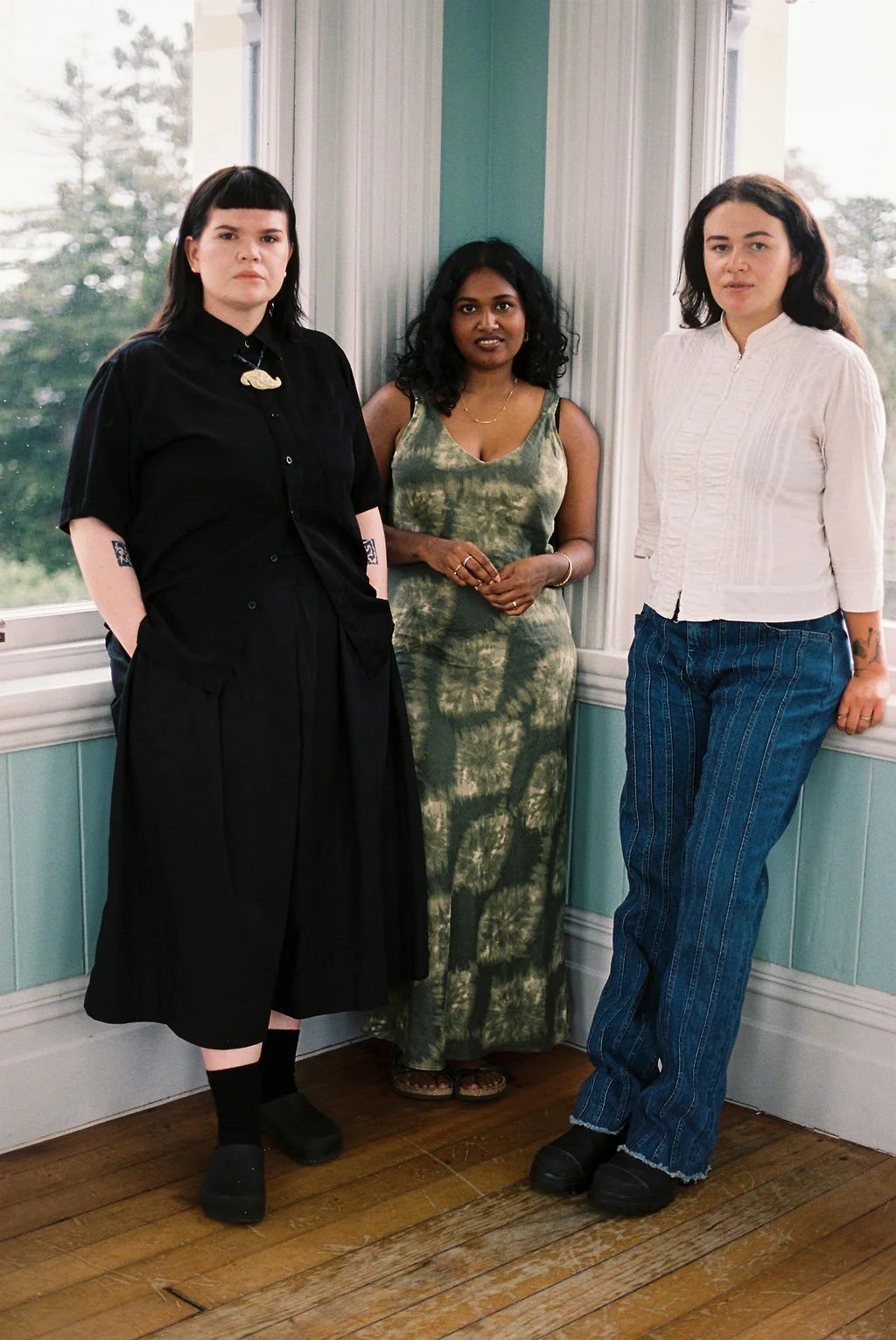
Hannah Ireland, brunelle dias, and Ruby Wilkinson. February 2026.
Credit & Thanks:
This series was photographed on film by Ophelia Jones with support from The Black & White Box, Auckland.

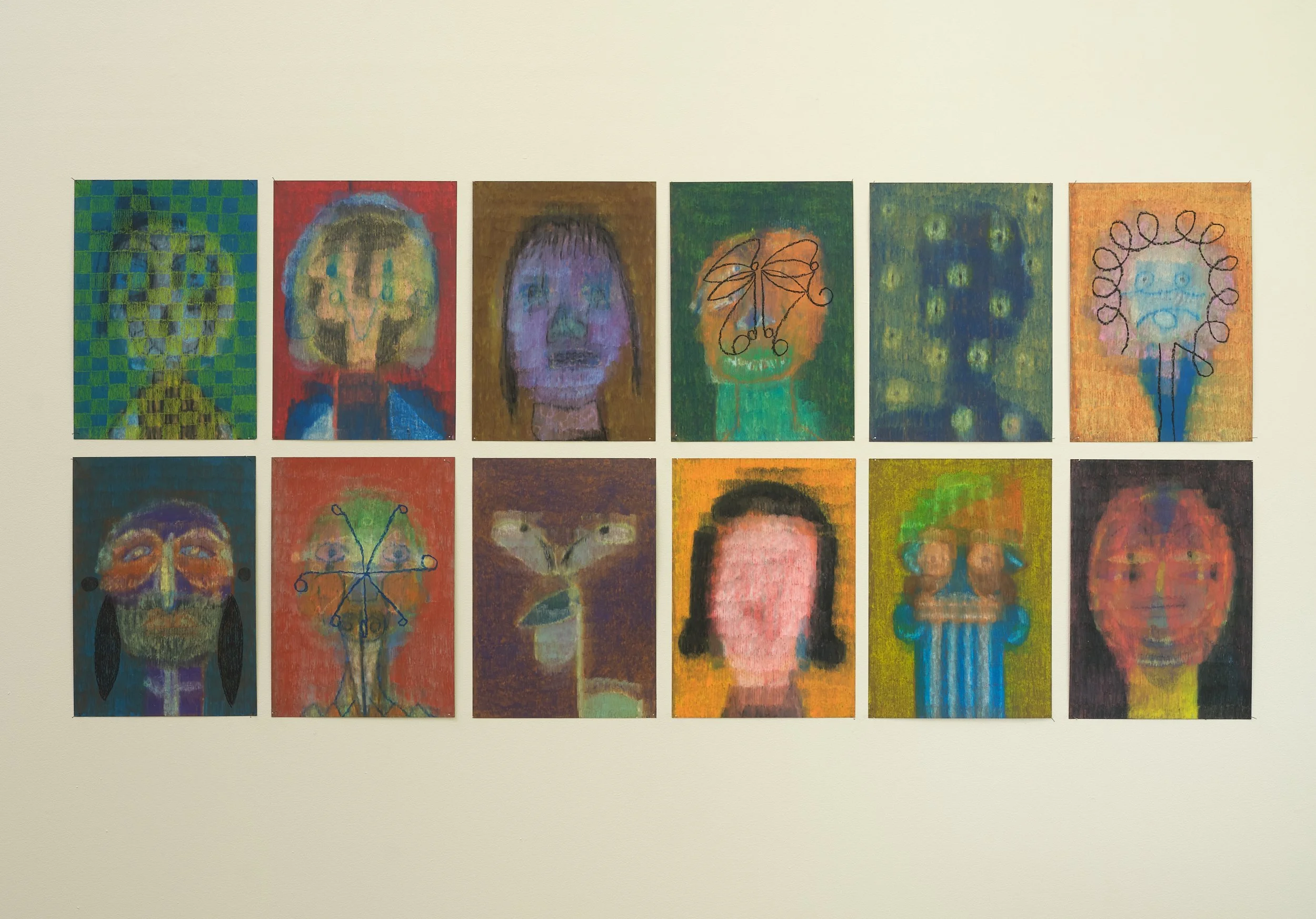
Hannah Ireland, Run with the Windows Open, 2025 in A Moment to Hold. Photographed by Sam Hartnett.